Beer · Ingredient · Reference page
Barley
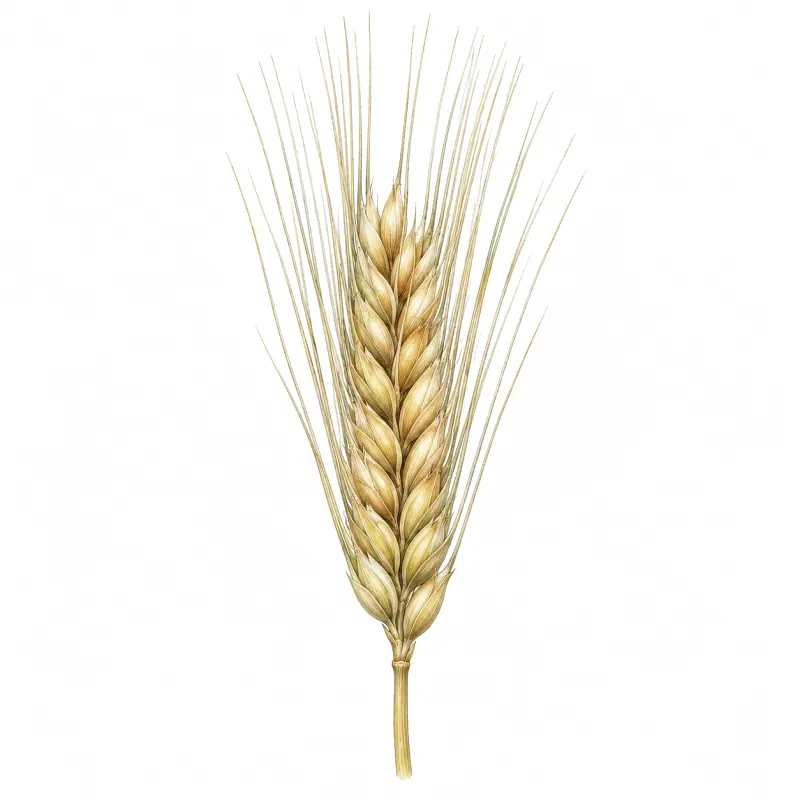
Barley is the main cereal of beer. Malted, it gives the starch, the enzymes and, through its husk, the natural filter bed that brewers rely on.
Role
Main source of fermentable sugar after malting; the husk forms the filter bed when the wort is run off.
The plant
Barley, Hordeum vulgare, is a grass that originated in the Fertile Crescent, where wild barley still grows. Brewers distinguish two-row barley, in which only the central flower of each group of three sets grain, from six-row barley, in which a single gene mutation makes the side flowers fertile too. Six-row grains are smaller, with less starch and more protein. Europe grows mainly two-row barley; six-row is widely grown and used in the United States.
Why brewers use it
Malting barley is grown to a protein specification, typically 10 to 12 % in two-row varieties, lower than feed barley. Its starchy core becomes the sugar that yeast ferments once malting has produced the enzymes to break it down. The husk protects the grain while it germinates and later acts as the filter bed in the brewhouse, which helps give clear wort. Other cereals can be malted, but barley is the pre-eminent malting grain.
How it connects
Method
- used in Malting
- made with Moutwijn (malt wine)
History
Story
- related A history of beer
- related Cereals: the grasses that fed the world
- related A history of whisky
Style
- made with Pilsner (Czech pale lager)
- made with Porter
- made with India pale ale (IPA)
- made with Genever
- made with Scotch Whisky
- made with Single Malt Scotch Whisky
- made with Irish whiskey
- made with Irish pot still whiskey
Continue exploring
- StoryA history of whiskyScotland, United Kingdom
- StyleGeneverProtected name
- StyleIrish whiskeyProtected name
- StyleScotch WhiskyProtected name
- StoryA history of beer
- StoryCereals: the grasses that fed the worldTurkey
- MethodMoutwijn (malt wine)Distillation
- StyleIrish pot still whiskeyLegal category
- StyleSingle Malt Scotch WhiskyLegal category
- MethodMaltingMalting