Beer · Method · Reference page
Malting
Malting wakes the grain and stops it again: steeping, germination and kilning turn barley into malt, rich in the enzymes and soluble starch that brewing needs.
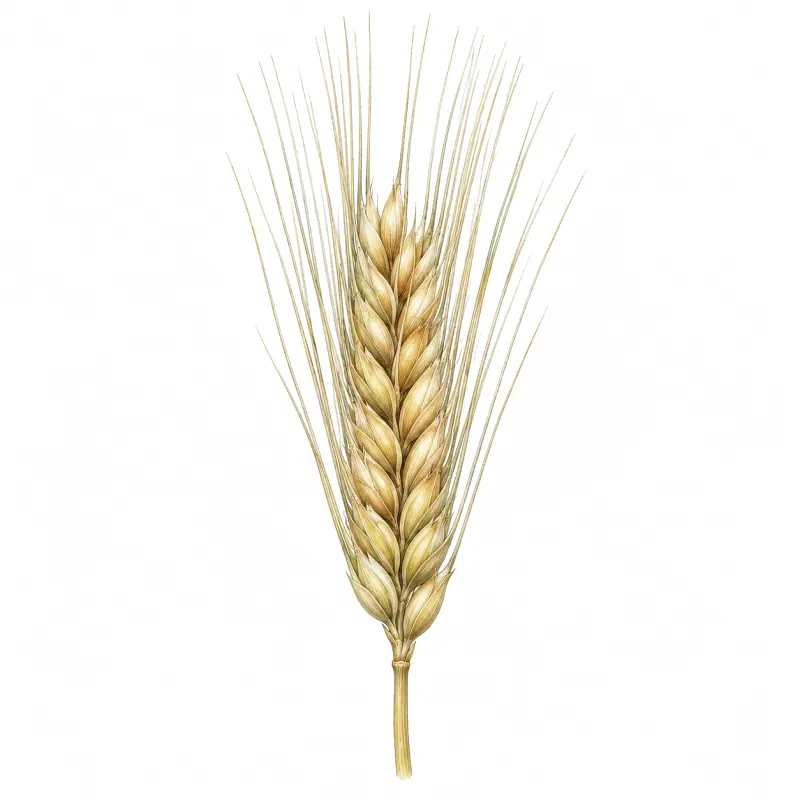
Method
Steep the grain to about 45 % moisture, let it germinate for 4 to 6 days, then dry it in a kiln to 3 to 6 % moisture.
Steep, germinate, kiln
Steeping. The barley is soaked and drained in cycles of about eight hours for up to two days, raising its moisture from about 15 % to about 45 %.
Germination. The wet grain grows for four to six days at 16 to 19 °C. It is turned and aerated so that the rootlets do not mat and heat and carbon dioxide escape. The grain breaks down proteins and makes the enzymes that will later convert its starch: maltsters call this modification. Turning was done by hand for thousands of years and is now mostly mechanical.
Kilning. Hot air at about 80 to 90 °C dries the green malt to 3 to 6 % moisture. Growth stops and the enzymes become dormant, to wake again in the hot water of the mash. Higher kilning temperatures give darker, more flavourful malts, but can destroy the enzymes, so dark malts cannot be used alone.
Kilns, smoke and colour
How malt is dried shapes the beer. In Bamberg, the Schlenkerla brewery still dries its malt over an open beechwood fire, which gives rauchbier its smoke. The pale malt of the first Plzeň lager probably came from a kiln fired indirectly with coke, a technique possibly brought from England; brewing guides credit English malting techniques as much as lager yeast for the pilsner style.
How it connects
Ingredient
- made with Barley
Style
- related Rauchbier (smoked beer)
- related Pilsner (Czech pale lager)
- technique Scotch Whisky
Story
- related A history of beer
- related A history of whisky
Method
- related Pot still distillation
History
Continue exploring
- StoryA history of whiskyScotland, United Kingdom
- HistoryFriar John Cor's malt, Exchequer Rolls 1494-51494-5
- MethodPot still distillationDistillation
- StyleScotch WhiskyProtected name
- StoryA history of beer
- IngredientBarleyHordeum vulgare
- StylePilsner (Czech pale lager)Recognised style
 RecipeChar siuGuangzhou, Guangdong, People's Republic of China
- StoryFrom juniper water to London ginSchiedam, the Dutch genever town, Netherlands
- StyleRauchbier (smoked beer)Recognised style