Beer · Style · Reference page
Lambic
Lambic is a sour wheat beer from Brussels and the Pajottenland, fermented spontaneously by wild yeasts and bacteria and aged in wooden casks. It is the base of gueuze, kriek and faro.
Method
Wort cooled overnight in a shallow open coolship, inoculated from the air, then fermented and aged in wooden casks for one to several years.
Character
Dry and sour, flat when served young and unblended; funky Brettanomyces notes with age.
How lambic is made
Lambic is brewed from malted barley with a high share of unmalted wheat, sometimes 30 to 40 %. The hops are aged for several years before use, so they preserve more than they bitter. After boiling, the wort is pumped into a coolship, a wide shallow vessel, and left overnight; the air inoculates it with local wild yeasts and bacteria. Brewing traditionally runs from October to April, when temperatures stay below about 15 °C.
Fermentation takes place in wooden casks left open to the air. A first stage of three to six months makes mostly alcohol; a second of one to two years makes mostly acids. Late in the sequence come Brettanomyces yeasts, which give lambic its "Brett" aroma. Unblended lambic is sour, without foam or sparkle, and served on draught in only a few places.
Protection
The Confederation of Belgian Breweries applied in 1996 to register traditional lambic beers as EU "certificates of specific character". The registration file defines them as acid beers from spontaneous fermentation, "a boiled wort after natural inoculation from the ambient air during cooling", with Brettanomyces as a determining microbe. Today "Oude Lambiek" is protected with Oude Geuze as a Traditional Speciality Guaranteed.
How it connects
Region
- produced-in Pajottenland and the Senne valley
- produced-in Belgium
Style
- parent of Gueuze (Oude Geuze)
- parent of Kriek (Oude Kriek)
Ingredient
- made with Hops
Recipe
- related Stoofvlees
Continue exploring
- CountryBelgium46 entries in the atlas so far
- RecipeStoofvleesBelgium
- IngredientHopsHumulus lupulus
- RegionBelgiumBelgium
- StyleGueuze (Oude Geuze)Recognised style
 RecipeBelgian fritesBelgium
 RecipeBoulets à la liégeoiseLiège, Belgium
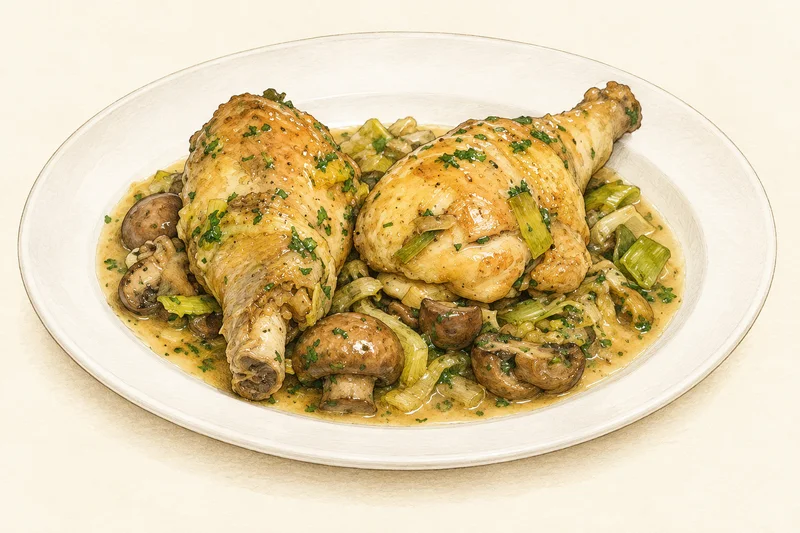 RecipePoulet à la bièreBelgium
- RegionPajottenland and the Senne valleyPajottenland, Belgium
- StyleKriek (Oude Kriek)Recognised style