
Explore the world · Food history · Reference page
Meat and butchery: from the first herds to the packing house
Sheep, goats, pigs and cattle were domesticated in the Fertile Crescent about 11,000 to 10,000 years ago; pigs again in China; chickens much later, in South-East Asia. Salt and smoke made meat keep. Medieval butchers formed powerful guilds in London and Paris, and in the nineteenth century Chicago's stockyards and refrigerated railcars built the industrial meat system that the world now runs on a far larger scale.
The first herds
Animals were domesticated in the same hills as wheat and barley. For a long time archaeologists marked domestication by a fall in body size, but Zeder (2008) showed that the better sign is the age and sex of the animals killed. Hunters take big adult males; herders kill surplus young males and keep females to breed. By that test, a managed herd of goats was kept at Ganj Dareh, in the Zagros mountains of Iran, directly dated to 9,900 years ago, before the goats' bodies had changed at all.
On current evidence, sheep and goats were brought under human control, probably separately and perhaps more than once, between the northern Zagros and south-eastern Anatolia about 11,000 to 10,500 years ago. Their wild ancestors were Ovis orientalis and Capra aegagrus, both native to the Fertile Crescent. Pigs were domesticated in south-eastern Anatolia by 10,500 to 10,000 years ago, and taurine cattle in the upper Euphrates valley between about 11,000 and 10,000 years ago. Clear physical changes, such as new horn shapes and smaller pig teeth, appear only about 9,500 to 9,000 years ago. All four species reached Cyprus by boat with the first farmers, 10,500 to 9,000 years ago.
Pigs again, and the late chicken
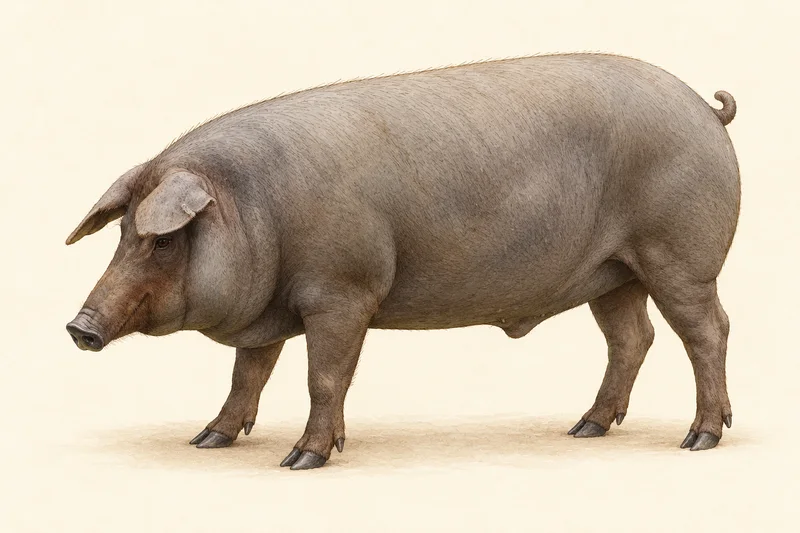
Domestication happened more than once. Larson and colleagues (2010) found genetic and archaeological support for an independent domestication of pigs in China, and possible further cases in India, South-East Asia and off Taiwan. In Europe, Near Eastern domestic pigs arrived between 7,500 and 5,000 years ago and were later replaced by pigs descended from European wild boar, so that today's European pigs carry no trace of Near Eastern maternal ancestry. Europe's pig breeds, among them the Iberian pig, are described in the Meat atlas.
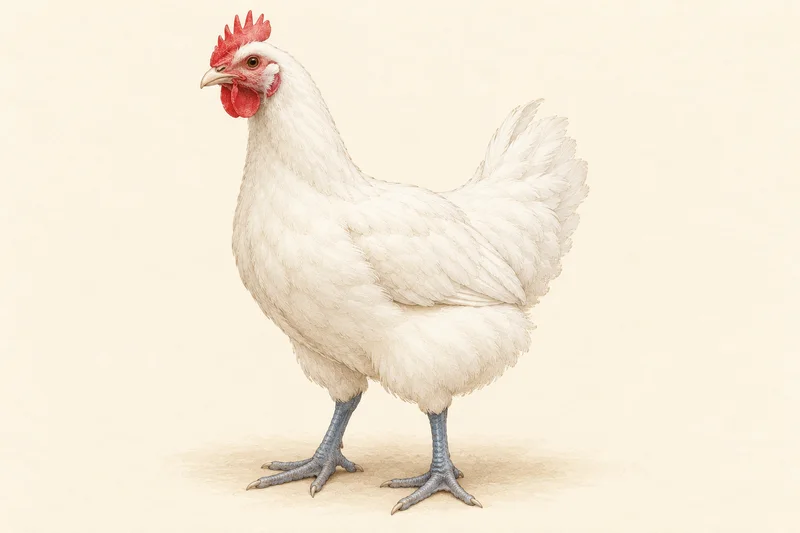
The chicken is younger than once thought. A review of chicken bones from more than 600 sites in 89 countries (Peters et al. 2022) concluded that the first unambiguous domestic chickens come from Ban Non Wat in central Thailand, about 1650 to 1250 BCE. Claims for chickens in Neolithic China or the Harappan cities of the Indus did not hold up, and the supposed Neolithic and Bronze Age chickens of Europe turned out, when dated directly, to be much later bones. The authors link early chickens to rice and millet farming, whose stored grain may have drawn wild junglefowl to people. Greek colonists brought chickens to Italy between 776 and 540 BCE.
Salt and smoke
Fresh meat spoils within days, so for most of history keeping it meant salting, drying or smoking. An early written method survives in Cato the Elder's Latin farming manual, De Agri Cultura. Cato tells the farmer to cut off the hocks and pack each ham in half a modius (a Roman dry measure) of ground salt, skin side down, in a jar, "taking care that meat does not touch meat". After five days the hams are moved so that the top layer goes to the bottom; after twelve more they are taken out, brushed clean and hung for two days in a draught. Then they are cleaned, rubbed with oil, smoked for two days, rubbed with oil and vinegar and hung in the meat-house. "No moths or worms will touch them," Cato promises.
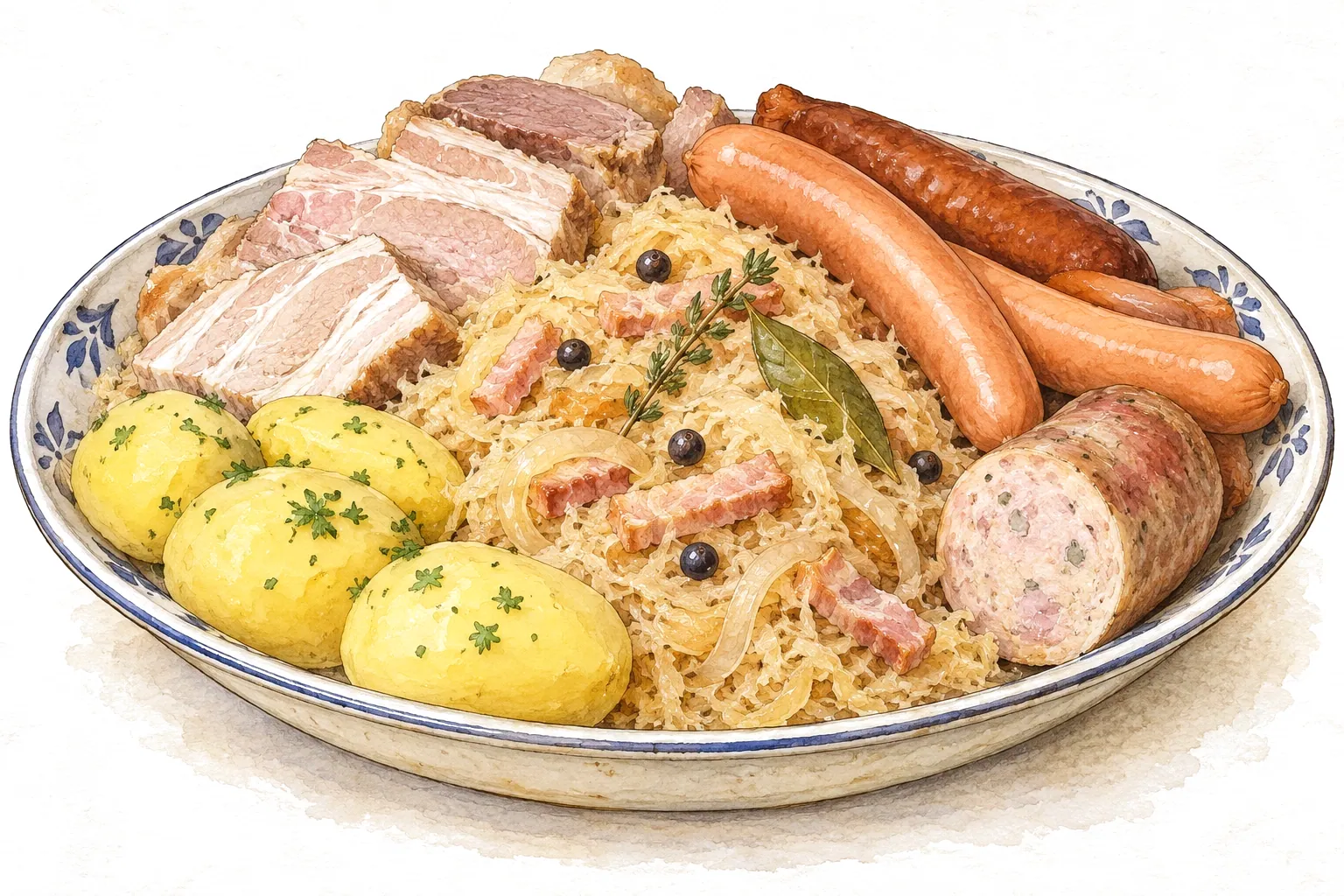
The chapter heading also names Puteolan ofella, which the Loeb editor suggests were the same as the lumps of salted pork (offulae carnis) that the Roman agronomist Columella also mentions. Salt and smoke remain the two treatments behind Europe's cured pork, from hams to the salted pork and smoked sausages served with choucroute garnie; salting and drying did the same work for fish, as the history of fish and seafood shows.
Butchers' guilds in London and Paris
In medieval towns, butchers were organised, regulated and often powerful. In London, a guild of butchers is first mentioned in 1179/80, though no record firmly links it to the later craft. Apprentices and freemen of the trade appear in the City's Letter Book D for 1309-11. James I granted the Worshipful Company of Butchers its charter in 1605, giving it control of the trade within the City of London and one mile beyond, under a Master, five Wardens and fifteen Assistants. A charter of 1637 let the Company fine anyone trading as a butcher in the City or within two miles of it who was not free of the Company. The Company also tells of slaughterhouses and a Butchers' Hall in the year 975; that is a tradition, not a documented fact. Its first recorded hall was lost in the Great Fire of 1666. Its records, from 1543/4 on, are held at the Guildhall Library.
In Paris the butchers of the Grande Boucherie held privileges that gave them a profitable monopoly. They also took sides in politics. They armed themselves in 1411 and joined the Cabochian rising of 1413. In 1416 the Armagnac government disarmed them, demolished the Grande Boucherie and stripped them of their privileges; in November 1418 they were allowed to rebuild it. The literary historian Fleur Vigneron shows that by the fifteenth century writers often portrayed butchers as violent and unruly, meschantes gens.
Chicago: stockyards and refrigerated cars
Industrial meat began in Chicago. Railways from the east reached the city in 1852, and during the Civil War many packers from Cincinnati moved to Chicago or built plants there; by 1863 Chicago was the leading meat-packing centre of the United States. Livestock dealers and the railways then combined the city's many small yards into one. The Union Stock Yard and Transit Company was chartered on 13 February 1865, bought 320 acres of swampy ground south of the city for 100,000 dollars, began building on 1 June and opened on Christmas Day 1865. It had pens for 21,000 cattle, 75,000 hogs and 22,000 sheep, and by 1900 covered 475 acres. Packing plants grew up beside it in what became known as Packingtown, and by 1900 the yards and plants employed nearly 33,000 people.
Gustavus Swift, Philip Armour and other packers changed the trade. They developed refrigerated railroad cars, improved canning and made extensive use of by-products. Inside the plants, a strict division of labour along the line took animals apart at high speed. Yard officials estimated in 1952 that 219 million cattle, 530 million hogs and 229 million sheep had passed through since 1865. The yards stayed dominant into the 1950s. Their stone gate, built about 1879, served as the main entrance until 1971 and is the only historic structure of the yards still standing.
Regulation and the modern meat system
Public pressure followed. Upton Sinclair's novel The Jungle described conditions in Chicago's meat-packing plants, and the US Food and Drug Administration calls it "the final precipitating force" behind both a federal meat inspection law and a general food and drug law. President Roosevelt signed the Food and Drugs Act on 30 June 1906.
The system Chicago pioneered now operates worldwide and on a much larger scale. FAO reports that world meat production reached 374 million tonnes in 2024, 28 % more than in 2010. Chicken has grown fastest and, at 128 million tonnes, now exceeds pig meat (125 million tonnes), which was hit by African swine fever in 2019 and 2020. Cattle meat reached 70 million tonnes. China produces 46 % of the world's pig meat. Livestock also has an environmental cost: in 2013 FAO estimated that livestock supply chains emit 7.1 gigatonnes of carbon dioxide equivalent a year, 14.5 % of all human-caused greenhouse gas emissions, two-thirds of it from cattle.
How it connects
Continue exploring
- CountryUnited States of America33 entries in the atlas so far
- RecipeChoucroute garnieAlsace (Krautergersheim), France
- StoryCereals: the grasses that fed the worldTurkey
- StoryFish and seafood: hooks, salt, steam and farmsNorway
- StorySpices and salt: pepper, nutmeg and the taxed necessityIndonesia
- BreedBresseBresse (Ain, Jura, Saône-et-Loire), France
- BreedIberian pigDehesa of south-western Spain, Spain
 RecipeBaeckeoffeAlsace, France
 IngredientBarleyHordeum vulgare
- StyleBourbon whiskeyLegal category